Date/Time
Date(s) - 24/11/2026
4:00 pm - 5:30 pm
Category(ies)
Date/Time: Tuesday, November 24th, 2026, 4:00pm – 5:30pm New York time
Title: Correcting Bias from Covariate-Dependent Censoring in Survival Disparity Decomposition
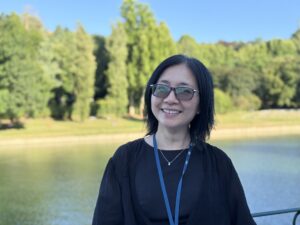
Speaker: Yan Li
Registration Link: Webinar Registration – Zoom
Abstract:
Research on racial and socioeconomic disparities in time-to-event outcomes is central to public health, but common decomposition tools can be biased when censoring depends on baseline covariates. Traditional Peters-Belson (PB) survival decompositions typically combine Kaplan-Meier (KM) estimates for observed group survival with Cox-model predictions for counterfactual survival. This workflow creates two problems. First, KM targets marginal survival only under censoring independent of all covariates; this is implausible when attrition, dropout, linkage failure, or competing risks are related to demographic, socioeconomic, and behavioral characteristics. Second, averaged Cox predictions are conditional-model quantities and need not reproduce a marginal survival curve. The observed and counterfactual pieces of the decomposition may therefore be calibrated to different targets.
This extended abstract presents a semiparametric inverse-probability-of-censoring-weighted propensity-score (IPCW-PS) framework for survival disparity decomposition., The method estimates observed and counterfactual survival with the same weighted estimating logic, corrects covariate-dependent censoring, accommodates sampling weights, and preserves the interpretation of overall, unexplained, and explained disparity over follow-up time.
Bio:
Dr. Yan Li is a Professor of Biostatistics and Survey Methodology at the University of Maryland, College Park, and Assistant Director of the Biostatistics Shared Resource at the University of Maryland Marlene and Stewart Greenebaum Comprehensive Cancer Center. Her recent research focuses on improving the population representativeness of nonprobability samples, assessing health disparities, and conducting survival analyses using data from complex sample designs. Dr. Li is a Fellow of the American Statistical Association.